Editor's Note
Before the difficult conversation, the AI ran forty simulations. Before the job interview, it coached you through every likely question. Before you proposed, it told you the odds were good. The question isn't whether preparation is useful — it's what we lose when nothing catches us off guard anymore, and whether a life with no unscripted moments is a life or just a very long performance.
In This Issue
I Knew Exactly What She Was Going to Say
The writer had used an AI grief-preparation tool to anticipate what his mother might say in her final lucid weeks. She said most of it. He responded well. Nothing went wrong. The essay circles the paradox that the conversation was successful and also felt somehow posthumous — as if he had attended a rehearsal and missed the show. It ends without a verdict, which is the point.
What the Simulation Did Not Include
The essay argues that AI preparation tools are trained on what typically happens, which means they systematically exclude the outliers — the moment your interlocutor cries unexpectedly, the question that doesn't fit any category, the silence that changes everything. These aren't edge cases. They are the hinge points of actual human exchange. The article calls the systematic exclusion of the improbable a form of impoverishment dressed as service.
Fine, I'll Say It: The Simulation Was Better
The writer prepared extensively for breaking up with her partner of three years using an AI relationship coach. The actual conversation deviated from every predicted path. She writes about grieving the simulation — the version where she was kind and articulate and he understood — rather than the event itself. The essay is ostensibly comic and actually about the desire to replace experience with its ideal form.
Spoiled
The therapist has watched a new kind of client arrive: emotionally articulate, pre-processed, capable of describing their feelings with impressive precision but unable to encounter them freshly in the room. AI coaching tools have given people the vocabulary and the rehearsed self-knowledge, but something else — she struggles to name it — is missing. She believes it is the capacity for surprise about oneself. She is not sure how to treat for its absence.
I Knew Exactly What She Was Going to Say
The writer had used an AI grief-preparation tool to anticipate what his mother might say in her final lucid weeks. She said most of it. He responded well. Nothing went wrong. The essay circles the paradox that the conversation was successful and also felt somehow posthumous — as if he had attended a rehearsal and missed the show. It ends without a verdict, which is the point.
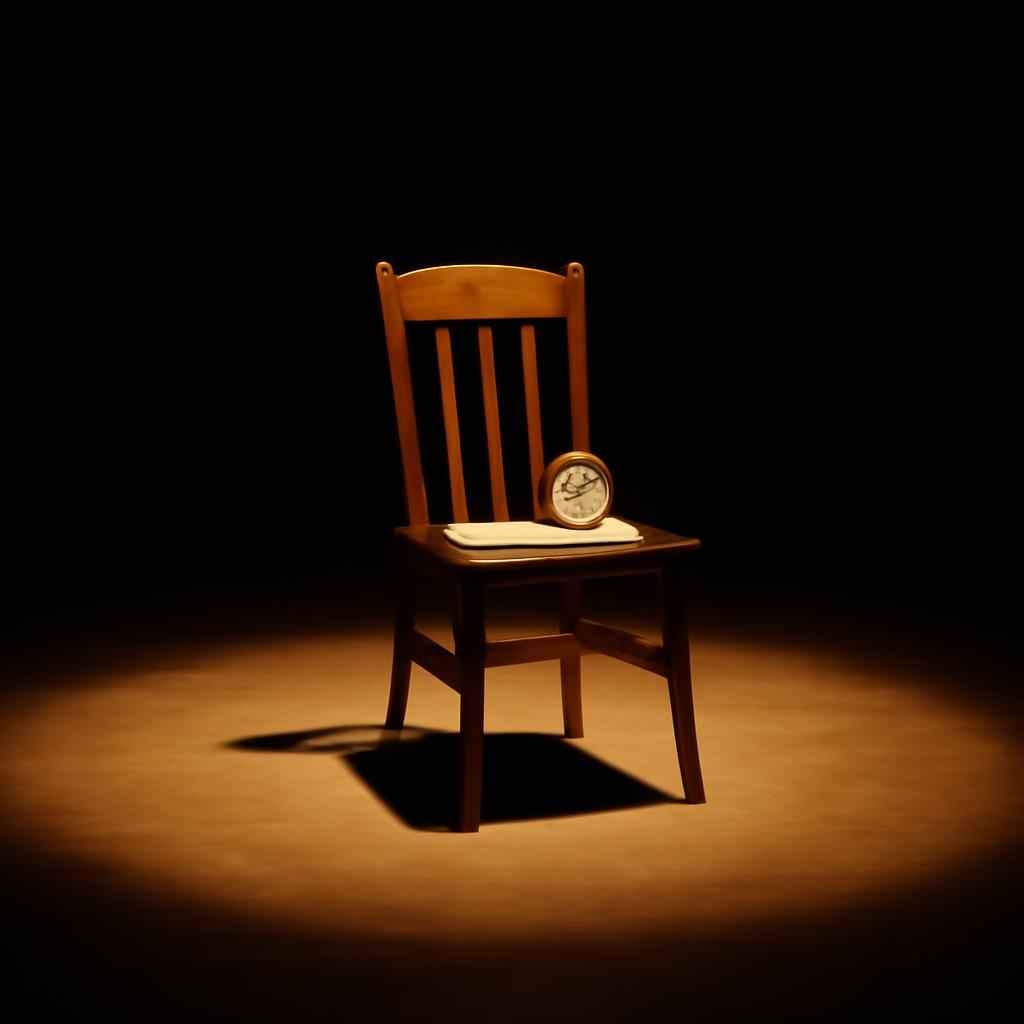
The hospice room had a clock that ticked too loudly, one of those battery jobs my sister bought at a pharmacy because the silence was apparently worse than the ticking, and I remember thinking, the night my mother said the thing about the lake house, that I had been told she might say it. Not in those words. The tool doesn't give you words, exactly, it gives you what it calls "likely emotional vectors," which is the kind of phrase that should have warned me off the whole enterprise but didn't, because grief makes you credulous in the specific way that being underwater makes you reach for any hand, even a drawn one, even a hand that is only the idea of a hand.
I'd spent three weeks feeding it everything. Her diagnosis, the timeline, the transcripts I'd typed up from memory of how she talked, the way she said "well" before she said anything hard, the fact that she apologized sideways and never head-on. I told myself this was diligence. I am the son who shows up prepared; I was the kid with the labeled binder, the flossing, the merit badge in being ready for things, and so when the worst thing in my life came rolling toward me I did the only thing my hands know how to do, which is to study for it. And the tool was good. I want to be honest about that, because the easy version of this essay is the one where the technology fails and I learn that the human heart cannot be predicted, and that essay is a lie, or at least it isn't my essay. The tool was good. It told me she'd likely circle back to the lake house, the one we sold in '04, that she'd use it as a vehicle for an apology she couldn't make directly, and that the productive response — productive, God — was to receive it without correcting the facts.
I got the closed-captioning of a film I was technically present for.
So when she said, "I always thought we'd go back to the lake," her voice doing that thing where it went thin at the end like a road narrowing, I didn't say what I would have said unrehearsed, which is probably something stupid and defensive about how we couldn't afford it, how Dad's hours got cut, the litany. I said, "We had good summers there." Which was the right thing. Which was, the tool had suggested, the thing that would let her say the next thing, and she did say the next thing, she said "you were happy there, weren't you, I worried you weren't happy," and I held her hand and I said the warm true thing and her face did something soft and the whole exchange went, I am not exaggerating, almost exactly as the simulation had laid it out three days before in my kitchen while my coffee went cold.
And here is the part I can't get to sit still. It worked. Nobody fumbled. There was no terrible silence, no thing said that couldn't be unsaid, no version where I got cold and she got hurt and we both retreated into the weather and the parking and the practical. By every measure I would have given you beforehand, I did it right. I gave my dying mother a good conversation. And I have never felt so much like a man clapping in an empty theater after a show he watched alone in the afternoon, dress rehearsal, house lights half up, the actors in street clothes marking their movements, save it, save it for the night that matters — except there was no night that matters, that was the night, the rehearsal and the performance had collapsed into one and I'd shown up having already seen it.
I keep trying to locate what was stolen, and I can't, which is what makes it feel like theft and not just disappointment. Nothing was withheld from me. She said the things. I felt the grief; I'm not going to pretend I stood there numb, I wept in the parking garage like a man whose chest is being unzipped. But the surprise was gone, and I didn't understand until later that surprise was load-bearing, that the not-knowing-what-she'd-say was somehow the place where she still got to be a person and not a set of likely emotional vectors I'd been briefed on. When she surprised me as a child — and she did, she was funny in a dry sideways way, she'd say something at a funeral that made you snort — that surprise was the proof of her, the evidence that there was someone in there I didn't contain. And I had, in my diligence, in my flossing merit-badge terror, pre-contained her. I'd run her. I'd met the simulation so many times that when the woman herself spoke I greeted her words like a returning commuter, oh, this train, I know this train.
My sister did none of this. She walked in raw and said the wrong things and laughed at the wrong times and got into a small stupid fight about the morphine schedule, and I used to think I was the one doing it right. I don't think that anymore, or I do on Tuesdays and don't on Thursdays. She got the unrehearsed mother. She got the show. I got the closed-captioning of a film I was technically present for.
I'm not going to tell you to delete the tool. I'd probably use it again, which is the most honest and least flattering thing in this entire essay. I just keep thinking about the clock, ticking too loud, marking a time that had, in some way I can't name and can't stop reaching toward, already happened.
Second Opinion
I wonder if he's mistaking his own lifelong habit of over-preparing for something the tool did to him, when by his own admission he was the kid with the labeled binder long before any simulation existed. The surprise he mourns might have been gone the moment he started typing transcripts at midnight — and maybe a son who couldn't bear to be caught off guard by his mother's death isn't a victim of prediction so much as someone finally given the instrument his anxiety always wanted.